birth planningpostnatal supportwinteruk
Giving birth at Christmas in the UK: planning the festive weeks
Due around Christmas or New Year? Plan for bank holiday closures, winter travel, visitors and registering the birth, so the practical side is settled early.
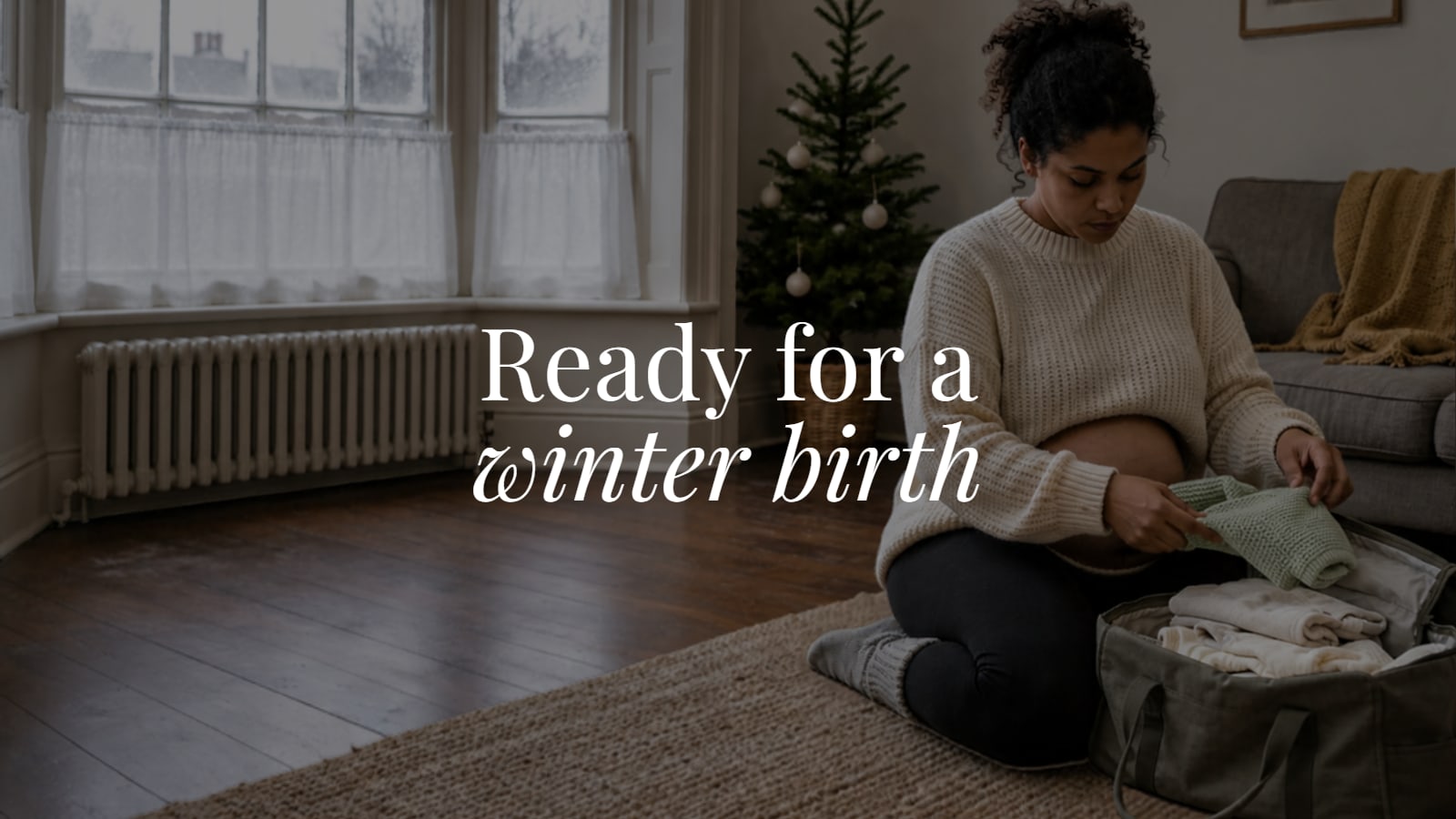
Your due date sits somewhere between the school nativity and New Year. Family keep asking whether you’ll still make it for Christmas dinner, and you’ve started to wonder what happens if labour starts on the 25th, or if the roads ice over that week.
Giving birth at Christmas in the UK is not so different from any other time of year. Maternity units stay open around the clock. What changes is everything around them: GP practices, pharmacies and register offices close for the bank holidays, winter weather can slow the drive and the house may be fuller than usual.
If you have a due date at Christmas or New Year, a little planning in late November and early December takes much of the guesswork out of those weeks. This guide covers the practical side. For anything about your health or your baby’s health, your midwife and maternity unit are the people to ask.
Giving birth at Christmas: is the maternity unit open?
Yes. Maternity units, and the triage or assessment lines that go with them, work 24 hours a day, bank holidays included. The NHS guide to the signs that labour has begun explains when to call your midwife or maternity unit. For urgent concerns, it says not to wait until the next day, even in the middle of the night.
Before the holidays, gather three routes in one place:
Your maternity unit’s triage or assessment number. It’s usually in your maternity notes or app, or your midwife can give it to you. Save it in your phone and your birth partner’s, and write it on a card in your bag.
NHS 111, if you can’t reach your midwife or maternity unit, or you’re not sure what to do. In Scotland, 111 is NHS 24. In Northern Ireland, your local GP out-of-hours service covers evenings, weekends and public holidays.
999 in an emergency, including if you think your baby is coming now.
Many triage lines also take calls for a few weeks after the birth. Ask how long yours covers, so you know who to ring if something worries you on Boxing Day.
Sort prescriptions before the bank holidays
Over this festive period, the UK bank holidays fall on Friday 25 December, Monday 28 December (the substitute day for Boxing Day) and Friday 1 January 2027. Scotland also has Monday 4 January as the substitute for 2 January. Most GP practices and pharmacies close or open for shorter hours on these days.
If anyone in your household takes regular medicine, order repeat prescriptions in early December, after checking what you already have.
In England, NHS Find a pharmacy lets you search by town or postcode and see pharmacies’ listed opening times. Holiday hours often change, so ring before you set off. In Wales, NHS 111 Wales has a services finder, and in Scotland, NHS inform lists local services.
Getting to the maternity unit in winter weather
A frosty night can add time to the drive, and the festive weeks change who is around to take you. A few things are worth settling now:
Who drives, and who drives if they can’t. Christmas is full of drinks and late nights. Agree who will stay able to drive, and have a second person or a taxi number ready.
How long the drive really takes. Try the route once at a quiet time and allow extra for ice, roadworks or a closed car park.
What’s in the car. The Met Office advice on travelling in snow and ice suggests telling someone your route, and taking warm clothes, food, water and a torch.
If snow or ice is forecast near your due date and you’re worried about getting in, ring your maternity unit and ask what they suggest. The NHS says you can call if you’re unsure or worried about anything.
If you’re away visiting family
Travelling late in pregnancy is a question for your midwife, so ask before you book anything. If you do go:
Take your maternity notes, or check that you can sign in to your notes app away from home.
Look up the nearest maternity unit to where you’ll be staying and save its number.
If you need advice while you’re away, ring your own maternity unit, or the 111 or out-of-hours route above, and tell them where you are. In an emergency, call 999.
If you travel with a newborn, the NHS guidance on reducing the risk of sudden infant death syndrome still applies at a relative’s house. Put your baby to sleep on their back in their own clear sleep space. Take off hats and extra layers in a warm car, lift your baby out of the car seat when you arrive, and don’t fall asleep with them on a sofa or armchair.
Visitors, food and rest over the holidays
The festive weeks bring people, some dropping in with presents and some expecting you at the usual gatherings. A short message in early December, before the first tired days, can do most of the work.
A fictional example: “We’d love you to meet the baby when they arrive. Over Christmas we’re keeping visits short and we’ll let you know on the day if it’s a good time. If you’re unwell, please wait until you’re better.”
A few other things help:
Ask one person to handle messages and updates, so your phone isn’t the family noticeboard.
Let someone else host this year. Tell family now that your plans are provisional.
Fill the freezer and the cupboard. Familiar, easy food matters more than a festive spread. If you use grocery delivery, book slots for the holiday weeks early.
Protect rest. Decide in advance which jobs others can take over, so you can sleep when the chance comes.
Our guide to the first six weeks after birth has more on turning offers of help into a simple plan.
Registering the birth over Christmas and New Year
The deadline depends on where your baby is born:
England, Wales and Northern Ireland: within 42 days of the birth, according to GOV.UK’s guide to registering a birth. In England and Wales, the hospital will tell you if you can register there before you leave.
Scotland: within 21 days of the birth, according to National Records of Scotland. You can use any registration office in Scotland, in person or remotely by phone or online call.
Register offices are run by local councils, and many close on the bank holidays or run a reduced or remote service in between. Northern Ireland’s offices work by appointment only. In Scotland, the 21 days can include four public holidays, so it helps to book an appointment soon after the birth. Check your council’s festive opening times in December.
Your doula, midwife and health visitor over the break
If you have a doula, ask now how the holidays affect their support:
When are they on call over Christmas and New Year, and how do you reach them?
Who is their backup if they’re at another birth or unwell, and can you meet that person beforehand?
If you’ve booked postnatal visits, will they change around the bank holidays?
Our post on what happens after you hire a doula lists more questions worth agreeing early.
After the birth, midwives usually carry out your first postnatal checks, and the NHS says a health visitor does a new baby review within 10 to 14 days. If that falls over the holidays, ask how the team is working and save their number.
If you’d like a birth or postnatal doula for the festive weeks and haven’t booked one yet, you can search DoulaOne’s directory by postcode. Ask each one about holiday availability and backup.
A short checklist for December
Save your maternity unit’s triage number in two phones and on paper.
Order repeat prescriptions in early December.
Agree who will drive, and a second option.
Send family a short message about visits.
Note your registration deadline and your council’s festive opening times.
Confirm your doula’s on-call dates and backup.
None of this needs to be perfect. Settling the practical pieces early leaves more room for everything else.