finding a douladoula supportpregnancyuk
How to find and compare doulas near you
Build a useful shortlist, send a first enquiry and compare availability, costs and support without getting lost in profiles.

A search for a doula can leave you with several open tabs and very little sense of who to contact. One profile describes a philosophy, another lists packages, and a third has a lovely photograph but no clear service area. You need enough practical information to start a conversation.
Begin with the support you want and the arrangements you need. A short, relevant shortlist is easier to compare than a large collection of names. There is no correct number of people to interview, and you do not need to tell your whole story in the first message.
Describe the help you are looking for
Write a few lines about your location, approximate timing and whether you want birth support, postnatal support or both. If you are unsure how those roles differ, start with our guide to what a doula does.
Add practical priorities that would affect a booking. These might include a language you prefer, access needs, the area you want covered, overnight support or a budget you would like the practitioner to work within. You can ask whether someone has relevant experience without disclosing detailed medical information at this stage.
Distinguish an essential requirement from something you would like to explore. For example, evening appointment availability may be essential because of your work. The precise number of antenatal visits may be something to discuss once you understand what each meeting is for.
For birth support, your due date helps a doula assess availability, but it does not tell you who would attend on the day. Ask about the whole arrangement, including the on-call period and backup. For postnatal support, think about the days, times and tasks that would make the greatest difference.
Look in more than one useful place
Directories, local practitioner websites and recommendations from people you trust can all provide starting points. You could ask your midwife, an antenatal educator or a community organisation whether they know local support options. A recommendation is a lead to investigate, rather than a guarantee that the person is right for you.
Check what a directory actually checks. A listed profile, a training certificate and availability for your dates are different things. Ask which details the directory verifies and which are supplied by the practitioner. If a qualification or membership matters to your decision, verify it with the awarding body. Do not infer competence, insurance or suitability from a listing alone.
If your first searches return few local options, ask practitioners about their travel area, team arrangements or remote support. Clarify which parts would be remote and which, if any, would be in person. An online preparation service is a different arrangement from someone attending your birth.
Read profiles for information you can follow up
A useful profile should help you identify what to ask next. Look for the service offered, area covered, relevant experience, how to enquire and enough information about charges to understand the next step. Do not assume a polished website proves competence, or that a brief profile means someone lacks it.
Training claims deserve a little unpacking. Ask what training was completed, whether the practitioner is working with a mentor and what experience relates to the support you want. A newer doula is not automatically cheaper, and years in practice alone do not tell you how someone will respond to your preferences.
Testimonials can describe what another family valued, but they cannot predict your experience. Notice whether feedback says anything concrete about communication, reliability or the agreed support. Ask about references if useful, while respecting that former clients may not want to discuss a private experience.
Send a first enquiry you feel comfortable with
Keep your message focused on availability and a next conversation. Here is a fictional example you can adapt:
Hello, I am looking for birth support in the Bristol area, with a due date in early March. Do you cover this area and have availability around that time? I would like to understand your service, fees and backup arrangements. Could we arrange an introductory conversation? Please let me know whether there is a charge for it.
Include a contact method that works for you and, if helpful, a couple of possible times. You can say that you would prefer to discuss sensitive details later. If a form asks for something you do not understand, ask why it is needed and whether it is required for an initial enquiry.
Privacy information should explain how your details are used. The ICO describes what organisations should tell you, including their purposes, retention and sharing. A form should not require you to infer this from the fact it has a password or private link.
A clear message helps someone answer, but does not guarantee a quick reply. Check any published response timeframe. If that passes, a brief follow-up is reasonable; you can also continue looking. Delays are not evidence that you wrote the wrong kind of enquiry.
Compare the arrangement after speaking
Use the same practical questions with each person so you can compare what you would actually receive. Our questions to ask before hiring a doula includes useful follow-ups.
After a conversation, note what was confirmed, what still needs checking and how you felt about the interaction. Feeling heard matters, alongside availability, scope, costs and a clear agreement. An encouraging conversation should not leave essential practical questions unanswered.
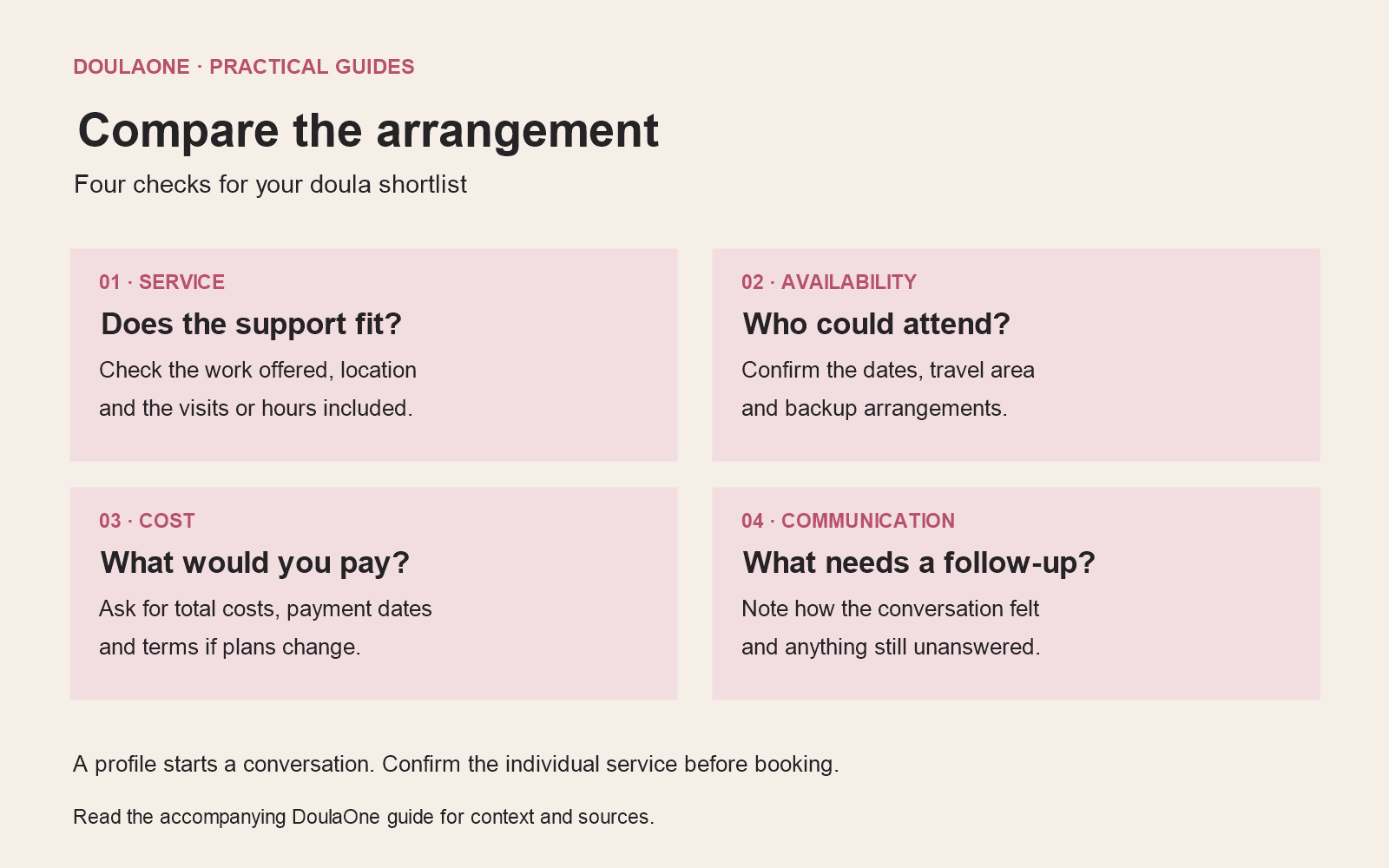
Keep a short comparison rather than trying to score every aspect of a person. For example: “Offers the postnatal hours we need; travel cost confirmed; backup still to discuss.” That gives you a useful next action without turning a personal choice into a contest between profiles.
If cost or local availability is a barrier
Ask about the total cost, payment dates and any options the practice offers. A payment plan can spread a cost, but does not necessarily reduce it. Do not assume there is a discount, or that you must agree to marketing photographs or a testimonial to discuss affordability.
If private support is beyond your budget, ask your maternity team or a local family-support service whether they know of community or charitable options in your area. Ask each programme about eligibility, the support offered and current capacity. Availability may be limited, so keep other support arrangements in view while you enquire.
Before committing, read the written terms and ask for anything unclear to be explained. Then keep a copy of what you agree. You can begin your shortlist on DoulaOne, using each profile as a starting point for checking the individual service and fit.