choosing a douladoula interviewbirth supportuk
Choosing a doula: questions to ask and what the answers tell you
Go beyond a reassuring first conversation. Ask about the service, backup, fees, privacy and how your choices will be supported.

An introductory conversation can feel reassuring and still leave you unsure what you would be booking. Questions about practical arrangements give you something concrete to compare: who will support you, what they can offer and what happens when plans change.
Choose the questions below that matter to you. You can send them ahead, take notes or ask for written follow-up. Check the format, length and any charge for the meeting before arranging it. You do not have to decide during the call.
1. What support would I actually receive?
Ask the doula to describe the service in everyday terms. Which antenatal meetings, birth attendance or postnatal visits are included? How long are visits, where do they take place and what support is available between them?
Follow up with a concrete example: “What might happen during a postnatal visit to our home?” or “What would our first antenatal meeting cover?” Listen for an answer that distinguishes the included service from optional extras. A warm description of an approach is useful, but it should lead to clear arrangements.
2. What training and relevant experience do you bring?
Ask about completed training, experience related to the support you want, ongoing learning and any mentoring. If the practitioner describes a membership or certification, ask who awards it, what it requires and how you can verify it. Different training routes can cover different work; ask how the learning relates to the service you are considering.
You can ask someone newer to practice how they obtain guidance, and someone with more experience how they keep learning. Avoid assuming either age or the number of births attended tells the whole story. Useful answers acknowledge the limits of a person's experience as well as its strengths.
3. How would you support a change in my preferences?
Try a scenario rather than looking for agreement with every current preference: “If I change my mind about pain relief or the kind of support I want, how would you respond?” You can also ask how they support a person whose choices differ from their own.
Your doula's role is non-clinical support. Their answers should leave room for your choices and for clinical questions to go to your maternity team. The NHS explains that treatment consent must be voluntary and informed. A supporter does not automatically become the person who decides for an adult who has capacity.
4. How will you include the people I choose?
Explain who, if anyone, you would like involved. That might be a partner, friend, relative or another trusted person. Ask how an antenatal conversation could help everyone understand the support you want.
Follow up with: “What if I want more space, quiet or a different person beside me during labour?” You are looking for a flexible arrangement that responds to you. If you are parenting on your own, discuss the support and backup you need without assuming there must be a second personal companion.
5. What exactly does your availability cover?
Ask for the start and end of any on-call period, when you can contact the doula, how they join you and what happens outside those dates. Discuss travel time, long labours and changes to your planned place of birth where relevant.
The number of clients booked in a month is only one part of availability. Ask how overlapping needs are handled, rather than assuming a smaller number guarantees attendance. A team arrangement may work differently from a solo practice. You need to understand the arrangement you are choosing.
6. Who provides backup, and how would it work?
Ask what happens if the doula is ill, delayed or supporting another family. Who contacts you? What support could the backup provide? Is an introduction possible? Are there circumstances where no backup is available, and what does the agreement say then?
Also ask what information would be shared with a backup and how they would learn your preferences. “There is backup” should lead to a practical explanation, including any changes to the fee or service. If something is not yet arranged, ask when it will be confirmed.
7. What is the total cost, and when is it due?
Ask about the fee, payment dates and additional charges such as travel, parking, extra visits or longer support. If you need a payment plan, ask whether one is available and request the details in writing. No particular deposit percentage or instalment schedule is universal.
Discuss cancellation, early birth, a change of plans and the practitioner being unable to deliver the agreed service. In the UK, a written policy does not override consumer rights. The CMA explains that consumer terms must be fair and transparent. Seek advice appropriate to your circumstances if a term is unclear or concerning.
8. What written agreement and insurance can I review?
Ask to see the terms before committing. The service described in conversation should match the document, including limits, costs and arrangements if something changes. Request a format you can read comfortably and keep the version you agree.
Ask whether the practitioner has insurance relevant to the services offered and how to raise a concern. Do not assume membership of an organisation automatically establishes insurance cover. A clear complaints process is useful even when you expect the relationship to go well.
9. How will you handle my information?
Ask what records are kept, who can access them, how they are shared and when they are deleted or reviewed. Explain if you prefer separate conversations to a shared family chat. Ask about photos and marketing permission separately from the service itself.
The ICO's privacy-information guidance describes the information organisations should provide when using your personal data. You should not have to share a detailed personal history before understanding what will happen to it.
10. What happens after the birth or final visit?
Confirm what follow-up is included and how it is arranged. If you want ongoing postnatal help, ask about its availability, scope and cost. Ask how the practitioner would help you find another service if your needs are outside their role.
You can request references or read feedback from former clients, with their privacy respected. Use those accounts as one source of information rather than a promise about your own experience.
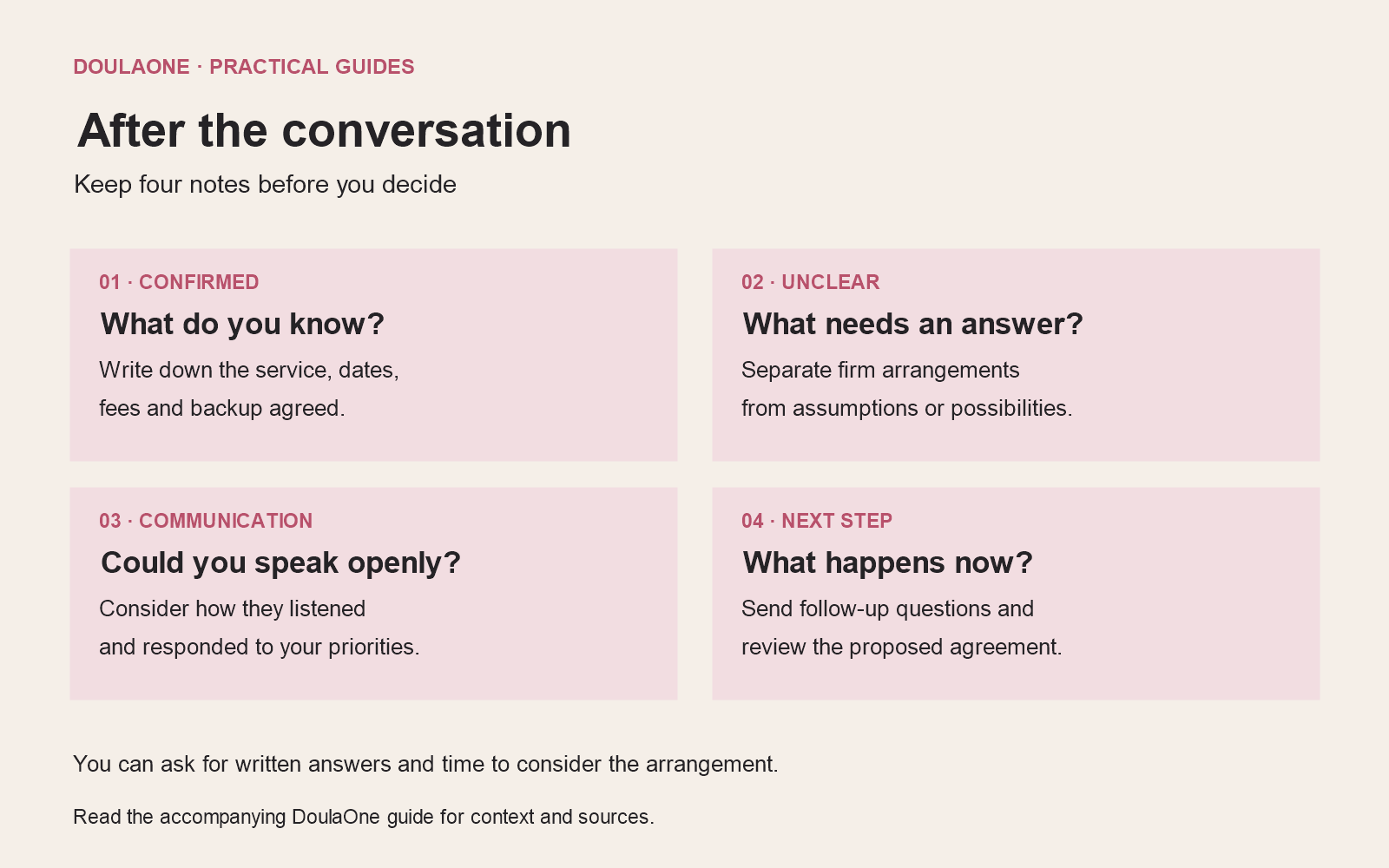
After the conversation
Write down the answers while they are fresh. Separate confirmed details from assumptions. If you heard “usually”, “probably” or “we can work that out”, decide whether you need a firmer answer before booking.
Ask yourself whether you could raise a disagreement, request a change or say no. You do not have to feel instantly relaxed with a new person, and a friendly conversation is not the only measure of suitability. Consider how they listened alongside the practical information.
Send any remaining questions and ask for a copy of the proposed agreement. When you are satisfied with the arrangement, our guide to what happens after booking a doula helps you organise the next steps.