postnatal supportpostpartumfamily supportnew parents
Planning support after birth: meals, rest, visitors and getting help
Turn offers of help into a plan that fits your household. Start with food, rest, everyday jobs and knowing who to contact when you need more support.

“Let me know if you need anything” is a kind offer. It can also leave you doing another job: noticing what needs doing, deciding who to ask and finding the words while you are tired.
A postnatal support plan turns a few of those offers into arrangements. Someone knows when to bring food. Someone knows that a visit may mean folding laundry while you feed the baby. You know where the maternity team's number is without searching through messages.
You do not need a perfectly organised household or a large support network. Start with the next few days and the help that is realistically available.
Plan around your household
There is no single version of life after birth. You may be parenting alone, sharing care with a partner, staying with relatives or caring for older children. A baby may need additional hospital care. Paid leave, finances, housing and disability can change what support is possible.
Try listing the jobs that happen in your home on an ordinary day: meals, washing up, school runs, pet care, shopping and keeping track of appointments. Then mark the ones someone else could take responsibility for.
Being responsible means noticing and completing the task, rather than waiting for a detailed instruction every time. “Could you manage our grocery order on Thursday?” is a clearer arrangement than “Could you help out more?”
Make food easy to reach
Choose food you like and will actually eat. A few familiar freezer meals, simple breakfasts and easy lunches may be more useful than a complicated menu. Keep drinks and snacks accessible where you spend time, within a setup that is safe around children.
If people offer meals, give them enough information to make the offer useful: dietary requirements, portions, a delivery time and whether you want company. You can say, “Thank you. A meal on Wednesday would really help; could you leave it at the door and text?”
No nearby helpers? Consider whether a grocery delivery, shared shopping list or occasional prepared meal fits your budget. If money or access to food is a concern, tell your midwife or health visitor so they can help you find local support. You do not have to present that need as a parenting problem.
Give rest a practical place in the day
“Rest when you can” becomes more useful when someone takes a job away. A supporter could handle the older children's breakfast, tidy the kitchen or sit with you while you work out the afternoon. Ask what would let you pause, rather than setting yourself a target for how much rest you should manage.
Discuss night-time support and feeding with the people involved. If you need feeding advice, ask your midwife or health visitor for help that fits your baby and circumstances. A support plan should adapt to feeding needs, not impose a schedule that ignores them.
Anyone caring for your baby needs the same safer-sleep information. The NHS advises placing babies on their backs on a firm, flat mattress in a separate cot or Moses basket in the same room for at least the first six months. Keep the sleep space clear and never sleep with a baby on a sofa or armchair. Read the full NHS safer-sleep guidance, including when bed-sharing is unsafe.
Decide what a helpful visit looks like
You might want plenty of company, quiet afternoons or different things on different days. There is no required visitor timetable.
Make requests specific enough for people to act on. For example:
“We would love to see you. Please check before coming over, and don't worry if we change the time. We may need a short visit. Putting a wash on or bringing lunch would be wonderful.”
You can welcome someone without hosting them. You can also ask a trusted person to manage messages if replying has become exhausting. Agree what they may share about you and your baby, including photographs.
Write a small support plan
Use four headings and add a name, a task and a time under each. If there is a gap, leave it visible so you can discuss it.
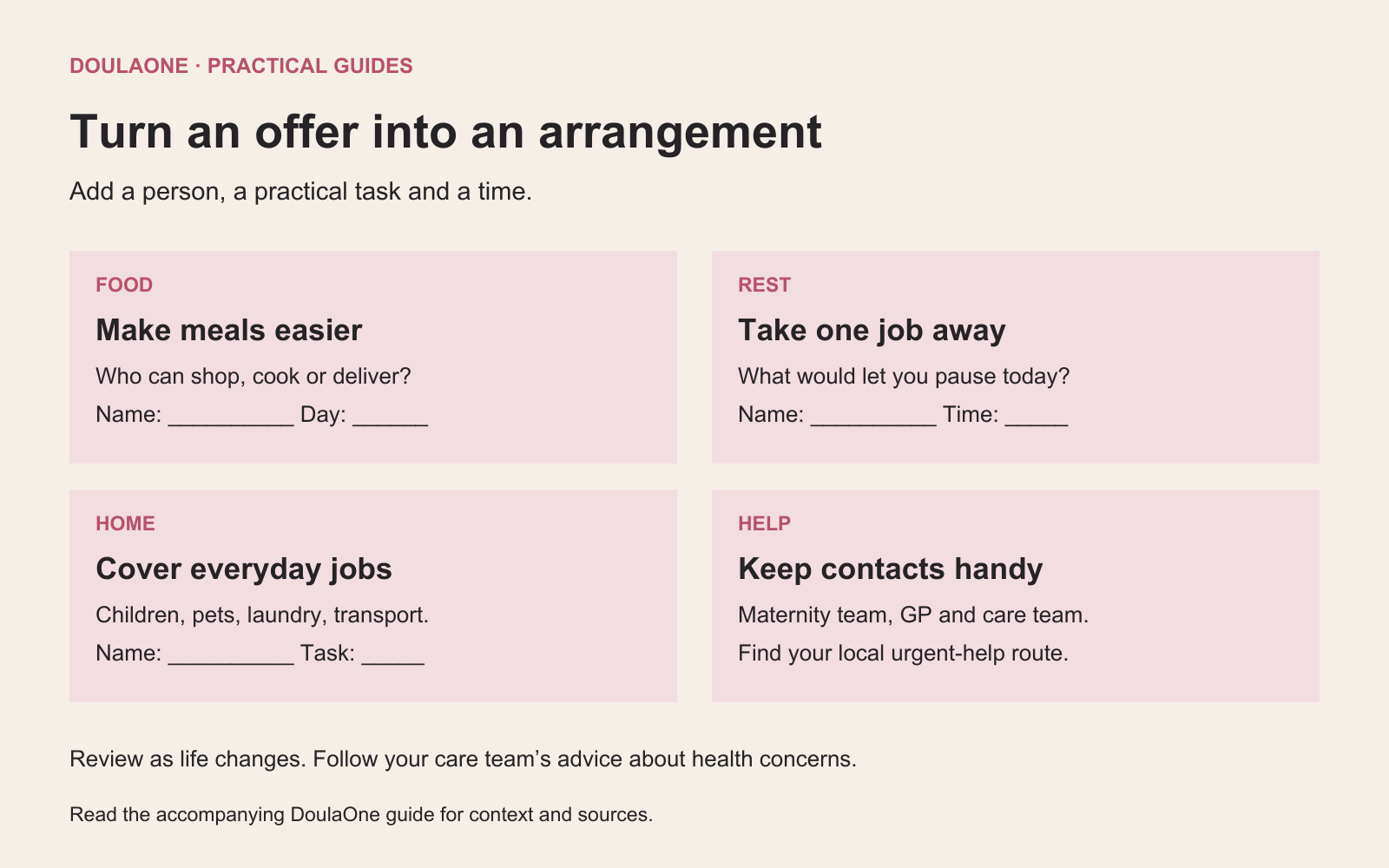
Food: who can shop, cook or deliver a meal?
Rest: what task can be taken off your hands today?
Everyday jobs: who is covering children, pets, laundry or transport?
Getting help: where are your maternity, GP and other care-team contact details?
A fictional arrangement might be: “Sam handles the shopping on Monday. Jo takes the dog out on Wednesday. My sister manages visitor messages until Friday. We review the plan at the weekend.” Keep the plan somewhere the relevant people can find it, without posting private health information in a group chat.
Know when practical support is not enough
Food and company cannot replace medical assessment. Keep the contact instructions from your own maternity team, and do not wait for a routine appointment if you or your baby need help.
Call 999 for an emergency. After birth, sudden very heavy bleeding, especially with faintness, dizziness or a pounding heart, needs emergency help. See the NHS advice on postnatal bleeding. Severe difficulty breathing, chest pain or collapse also need emergency assessment; the NHS explains these emergency warning signs. Call 999 if your baby stops breathing, will not wake or is struggling to breathe, as described in the NHS baby guidance.
Contact your maternity team or another appropriate clinician straight away about symptoms such as a painful, swollen calf; a headache with changes to your vision; or a high temperature with a sore, tender abdomen. The NHS lists these in your body after the birth. This is not a complete symptom checklist. If something feels wrong, seek advice.
For urgent help when you cannot reach your usual team, follow your local out-of-hours arrangements. In England, NHS 111 can direct you when it is not a 999 emergency. Save the correct local route with your midwife before you need it; services differ across the UK.
Take changes in mental health seriously
You can ask for help with your mental health without waiting to reach a particular threshold. Persistent or worsening low mood, anxiety, hopelessness or difficulty enjoying anything are reasons to speak with your GP, midwife or health visitor. Partners can need support too. The NHS explains postnatal depression and ways to get help.
Sudden severe confusion, hallucinations, unusual beliefs or markedly elevated, overactive behaviour after birth can signal postpartum psychosis. It is a medical emergency: seek an immediate GP assessment that day, or contact your crisis team if you have a care plan. In England, call 111 if you cannot reach a GP or do not know what to do. Call 999 if there is imminent danger. See the NHS postpartum psychosis guidance.
Tell a healthcare professional promptly about distressing thoughts of harming yourself or your baby. If you think you might act on them or anyone is in immediate danger, call 999. You deserve help, not a judgement about how well you are coping.
Where a postnatal doula can fit
A postnatal doula may offer practical and emotional support within an agreed scope: helping you think through the day, preparing food, listening or helping you find appropriate services. Ask what a particular practitioner offers, what is outside their role and how they handle a concern that needs clinical care.
You might start a conversation with, “The hardest part of our day is…” That gives you a more useful basis for discussing support than assuming you need a standard package. You can explore DoulaOne as a starting point for finding doula support.
Revisit your plan when circumstances change. The end of six weeks is not a deadline for no longer needing help. Keep asking what would make the next day more manageable.
UK-focused planning guide. Sources checked 27 September 2026. Follow advice from your own care team; this article does not replace individual medical assessment.