doula supportchoosing a doulausafamilies
Questions to ask a doula before hiring in the USA
Prepare for a doula conversation in USA with questions about support, backup, costs, local arrangements and the written agreement.

A doula can feel like the right person during an introductory call, while the payment route, hospital arrangements and backup are still unclear. In the USA, those details deserve a place in the same conversation as your preferences. Before paying a deposit, separate what the doula can confirm from what you need to check with your health plan or birth facility.
Check the length, format and any charge for the introductory meeting. You can send your questions ahead, bring a chosen supporter or ask for written follow-up. Use the prompts that relate to the support you want.
1. What would the service include in practice?
Ask the doula to walk through the proposed arrangement: preparation meetings, birth attendance, support between meetings and any postpartum visits. For each part, establish the length, location and who provides it.
Follow up with a situation: “What would a visit to our home look like?” or “What would we work through in our first meeting?” The answer should help you distinguish included support from an optional extra. Ask what falls outside the role and who you should contact for clinical questions.
2. What experience and training relate to my needs?
Ask what training they have completed, what relevant experience they bring and how they continue learning. If someone names a certification, ask which organization awards it and how you can verify its status. The Kansas health department's interview guide is one public resource for preparing that discussion. Certification and eligibility to bill your particular benefit are separate checks.
Someone newer to practice may be able to explain their mentoring arrangements. Someone with many years of experience should still be able to describe how they learn and respond to individual preferences. A polished profile or a large birth count does not answer every question about fit.
3. How would you respond if I changed my mind?
Try a scenario: “If I change my preference about pain relief or who I want beside me, how would you support me?” Ask how they work with your chosen people, including a partner, friend or relative if you want them involved.
Listen for room to make your own decisions. You should be able to ask for quiet, decline a comfort measure or request a different kind of support. Ask how the doula would help you raise a question with the clinical team while keeping medical advice with the appropriate professional.
4. Who could attend, and when?
Ask for the start and end of any on-call period, contact arrangements, how the doula joins you and what happens outside those dates. Discuss overlapping bookings, illness, delays and long births. “We have backup” needs a practical explanation: who, how you are introduced and what happens if nobody is available.
Ask what information is shared with a backup and how they learn your preferences. A team may make different arrangements from a solo practitioner. You need to know the arrangement you are choosing, rather than infer it from the number of clients booked.
5. What needs checking with the birth service or about location?
Confirm support-person arrangements with your hospital or birth center as well as with the doula. Ask specifically about the places you might use, including an operating room or recovery area. “I have worked there before” is useful context, but does not establish access for every circumstance.
Write down who will check any unanswered point and when you expect to hear back. Do not turn a possibility mentioned in a conversation into a confirmed part of the booking.
6. Which payment route are we arranging?
If you plan to use insurance, Medicaid or an employer benefit, contact the program or plan about the specific practitioner and service. Ask whether you need an enrolled or in-network provider, a recommendation, authorization or particular paperwork. Ask the doula which payment routes they actually accept and whether they bill directly.
California example: DHCS directs Medi-Cal managed-care members to their plan's Member Services for help securing doula support. Fee-for-service members can use the enrolled-provider directory. Other states have their own arrangements; do not apply California's process to your state.
Try: “What would I pay before a claim is processed, and what happens if the claim is denied?” Request a written answer from the relevant plan and practitioner. For a private booking, ask for the total in US dollars, payment dates and any travel or additional-hour charges.
7. Can I review the agreement, privacy arrangements and insurance?
Request the proposed terms before committing. Check that they match the conversation, including cancellation, a change of plans and the practitioner being unable to provide the service. Ask about insurance relevant to the work and how to raise a concern. Seek local consumer advice if a term needs more explanation than the provider can give.
Ask what personal information is collected, who can see it and how long it is kept. Discuss messages, records, photos and information-sharing with a backup. You can ask about service records separately from permission to use a story or image for marketing.
8. What happens after the birth or final visit?
Confirm the follow-up, how you arrange it and whether further support can be booked. If you want specialist feeding, mental-health or other care, ask who would provide that service and what qualifications they hold. A referral conversation is different from a promise that another provider will be available.
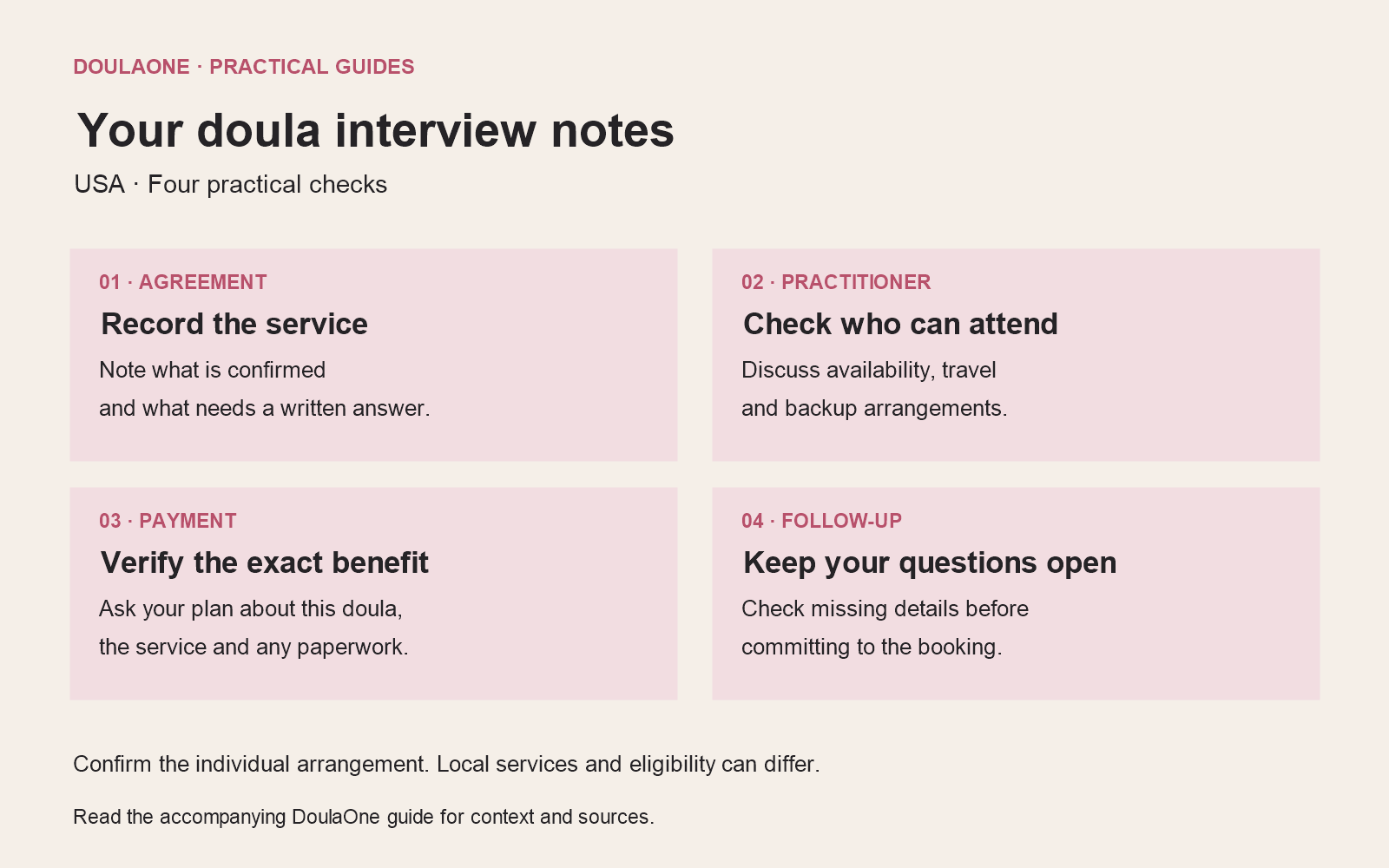
Make your decision from confirmed information
After the meeting, note what you know, what remains open and how the communication felt. Could you disagree or ask for a change? Did the person listen to the priorities you actually raised? Were practical answers clear enough to compare?
Send a short follow-up for missing details and keep the written response with the proposed agreement. You can take time to decide. The aim is a support arrangement you understand and feel able to discuss openly.